
Who Makes What and Why
By Logan Schraeder, Co-Founder, Toadworx
If you've spent more than fifteen minutes on r/nightvision trying to figure out which IR laser to buy, you've probably noticed that the conversation tends to diverge into two camps: "just get a PEQ-15" and "the Holosun Iris is fine for most people". Neither answer is necessarily right or wrong. But neither tells you much about what you're actually choosing between or why.
This is an attempt to add another source of knowledge into the market for new and experience night vision users.
Upfront, we build a LAM: the BATL ("battle") so we have a selfish stake in this conversation. We're going to try to be straight with you anyway, because the community is good at sniffing out self-serving takes, and because we genuinely think the honest version of this map is more useful — to you, and ultimately to us.
What a LAM actually does
An IR laser aiming module (LAM) usually does three things: it projects an IR laser dot for aiming under night vision, a visible dot for daytime zeroing, and (on most units) it projects an IR illuminator beam to light up what you're looking at. That's it. The true complexity lives inside those two functions. The market price spread — from $200 to $4,000 — is mostly explained by how well each unit does the IR stuff, who it's sold to, and the durability levels it must be built and tested to.
There are real tradeoffs at every tier. None of them are zero-cost.
Here's the tier breakdown at a glance before we get into the detail on each one. Keep in mind these are overarching generalities, and there are always outliers.
| Attribute |
Mil-Spec
Duty / Government Contract
|
Mid-Market
Enthusiast / Commercial Tier
|
Budget Import
Entry / Non-Critical Use
|
|---|---|---|---|
| Street Price Approximate retail | $1,800 – $4,000+ | $400 – $900 | $150 – $400 |
| Illuminator Tech IR emitter architecture |
LED or EEL
Edge-Emitting Laser or High-Output LED
|
LED, EEL, or VCSEL
Modern VCSEL offers clean, artifact-free beam
|
Typically LED or EEL
Often unfiltered; dirty beam or halo rings
|
| Housing Chassis materials | Machined aerospace aluminum (6061/7075), titanium, or impact-molded polymers | Machined aluminum, titanium, and/or molded reinforced polymers | Cast or machined aluminum, standard molded plastics |
| Durability Shock & weather rating |
MIL-STD Certified
Verified recoil resistance & submersion
|
Varies by Model
Often unrated; user-tested on 5.56/.308
|
Minimal / Unverified
High risk of zero shift under hard recoil
|
| Origin Manufacturing source |
USA (typically)
Established prime defense contractors
|
Mixed
Select US assembly, majority overseas
|
Overseas
Direct factory imports / white-label
|
| Warranty Support Customer service & RMA |
Robust Support
Through authorized civilian/mil dealers
|
Manufacturer Dependent
Decent, but RMA turnaround can vary
|
Minimal to None
Self-service or high return friction
|
Obviously we can’t cover everything here, but this is a good starting point. Read on to learn about what drives many of the differences between these tiers.
Tier 1: Military-spec
Representative units: L3 ATPIAL (PEQ-15), Steiner DBAL-A2, B.E. Meyers MAWL
Street price range: $1,800–$4,000+
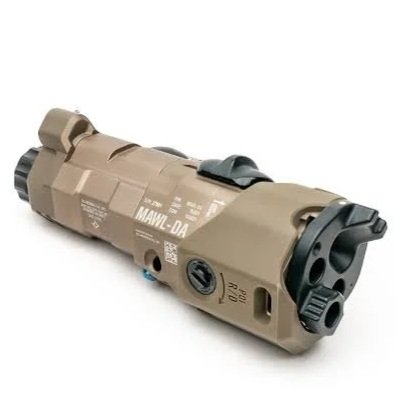
Who it's built for: Defense users with a very broad mission set and environmental demands. Units in this tier were designed to meet military contract specifications — not because those specs are always optimal for civilian or even rifleman use, but because the customer has a very broad set of use cases and environmental demands.
What you get: The highest build quality available. True IP67 or better waterproofing plus MIL-STD shock and environmental certification. Full-power IR output (Class 3B lasers for real MIL/LE models. Nerfed Class 3A versions for civilian sales). Proven track record at scale, in adverse conditions, over years of sustained use. Warranty and service infrastructure from established defense contractors.
What you give up: Money, obviously. But also: these units weren't designed around ergonomics or civilian use cases. The PEQ-15 is a brick on a rail. Full-power illuminators wash out modern NODs at the ranges most people actually shoot — 75 to 100 meters. The MAWL is excellent and compact, but you're paying for performance headroom you will very likely never use. Worst of all, probably, is that when you pay for a "real" unit you're actually getting a watered down version of the mil-spec one but for the same price.
Gray market caveat: A meaningful portion of DBAL-A2s and PEQ-15s in the civilian market are gray market units — sourced outside authorized distribution channels, often without warranty support. If you send a gray market unit back for service, don't expect to see it again. Know what you're buying.
Tier 2: Mid-market
Representative units: Holosun Iris, SMS Trinity
Street price range: $400–$900
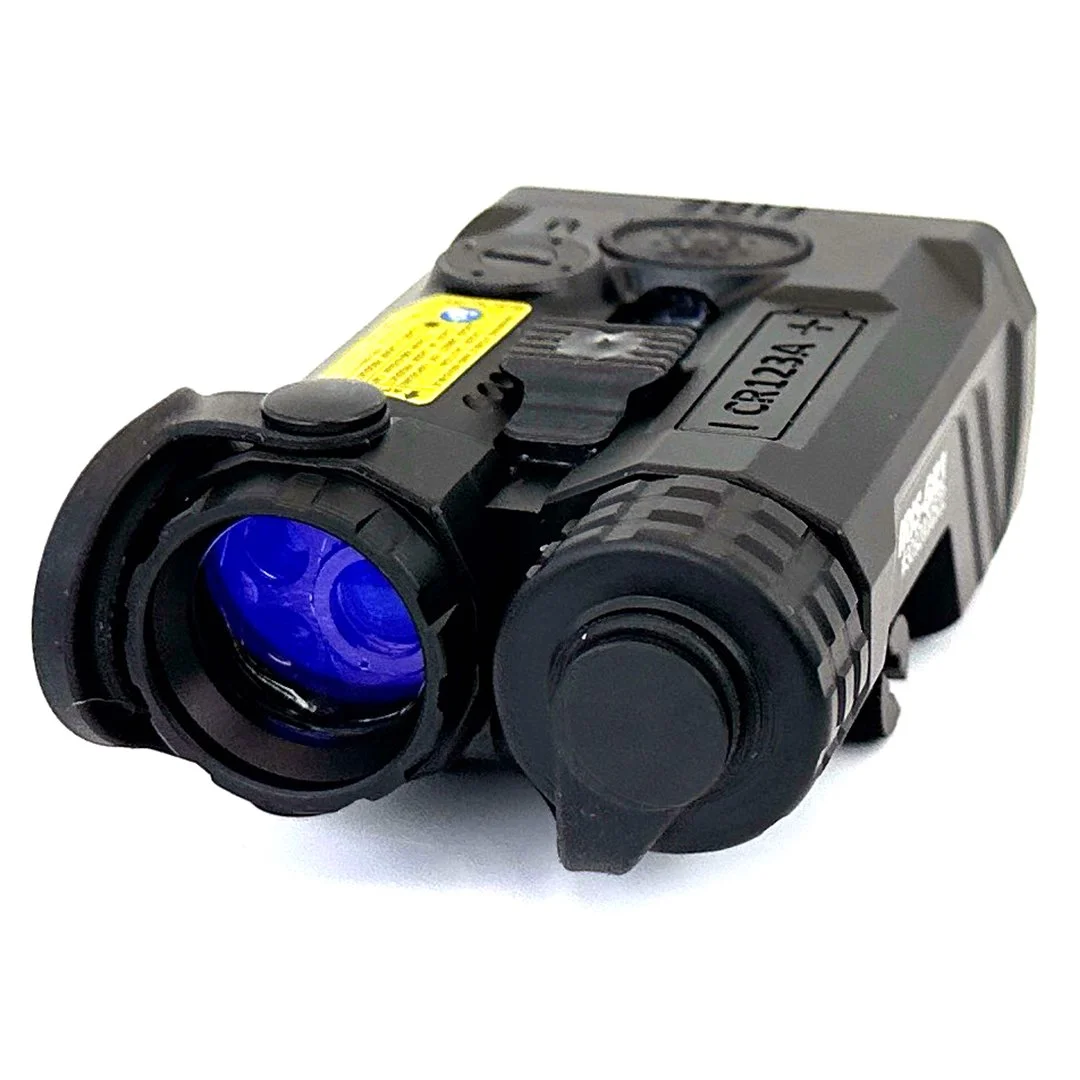
Who it's built for: This tier is a mixed bag. Some units are civilian-first designs built to a price. Others are quasi-mil-spec designs that got released to the civilian market as a secondary channel. The build quality and design intent vary more at this tier than anywhere else, and a lot of that has to do with design intent and country of origin.
What you get: A functional LAM at a price point that doesn't require a second mortgage. The Holosun Iris in particular has earned genuine respect in the community — compact form factor, usable button placement, solid IR laser. Due to foreign companies not having to directly comply with FDA regulations, most imports come with unregulated "full power" lasers on board. Word to the wise: that "compliance risk" then actually falls onto the importer and the end user. Will anyone ever come for you? Probably not. But it's there.
What you give up: Environmental durability is the most common failure point. We've heard consistent reports — and seen it firsthand — of mid-market units struggling in sustained cold, wet, or dusty conditions. Plastic housings that work fine in summer fail at 15 degrees. That matters if you actually shoot year-round and not just at an indoor range in good weather, or if you ever LARP with your kit where there's no air conditioning.
The gray zone: Some units in this tier come from manufacturers with opaque supply chains. You may not know what components are inside, what QC process they went through, or whether a replacement is available if it fails. That's a tradeoff some buyers are comfortable with and worth being conscious of.
Tier 3: Budget imports
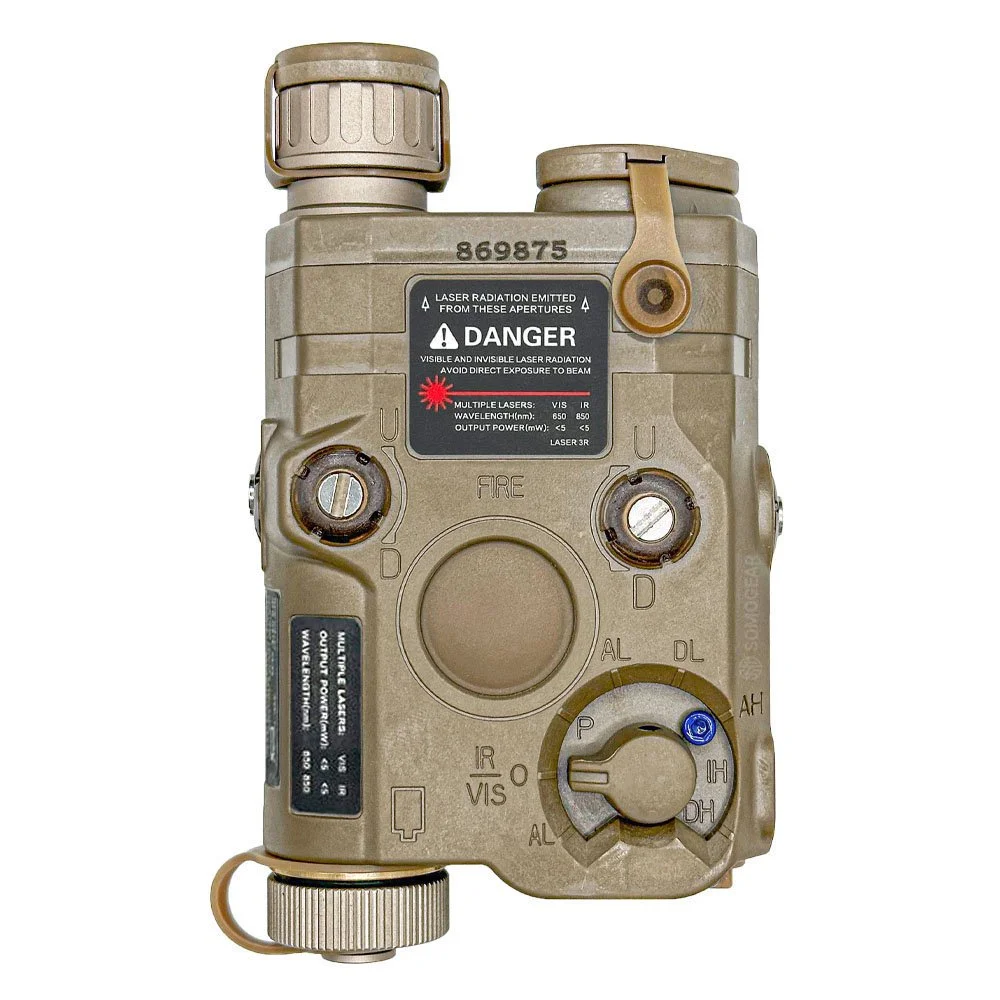
Representative units: Somogear, SOTAC, other clones
Street price range: $150–$400
Who it's built for: Price-sensitive buyers, airsoft crossover, people getting into NV who aren't ready to commit serious money yet.
What you get: Similar to the other tiers, you typically get an IR pointer, visible pointer, and IR illuminator of varying type and quality. These units work, in the sense that they produce light and they mount to a rail. Some of them work surprisingly well for a short period of time or with extensive modification and know-how. Ironically some of their electronics function better than their mil-spec counterparts, until they meet rain or recoil.
What you give up: Durability is the primary issue, and it's not subtle. In cold weather, 3D-printed housings contract and crack. Windage and elevation adjustments free-spin and fall out. Illuminator optics degrade. Water literally seeps into the housing. We've talked to enough users who've run these units — including several who've run multiple of the same model — to have confidence that the failure rate is real, not just Reddit anecdote.
If you're using one as a beater unit, a loaner, or a proof-of-concept while you figure out what you actually want — that's a legitimate use case. If you're staking a self-defense or duty setup on one, that's a different risk calculus.
Where Toadworx fits
The BATL (Bispectral Aiming Tactical Laser) is built to fill the gap that most people in this community have been complaining about for years: a LAM that's made in the US, built to last, designed around how civilian and LEO users actually shoot, and priced between the mid-market and mil-spec tiers.
That means $800 MSRP. It means machined aluminum housings, not injection-molded plastic or 3D-printed polymer. It means the ergonomics — button size, button placement, pressure pad interface — were designed with gloves on, LPVOs and ACOGs, and c-clamp grips in mind. Our first production units ship with a clean LED illuminator and pointers; a VCSEL option is on our roadmap for future versions and/or other products.
Here's how that shakes out against the other tiers:
| Metric / Spec |
Featured
BATL
Toadworx
|
Mid-Market Typical
Commercial Tier
|
Mil-Spec Typical
Gov / Prime Contract
|
|---|---|---|---|
| Price MSRP / Market range | $800 | $400 – $900 | $1,800 – $4,000+ |
| Housing Chassis construction |
Machined Aluminum
Full aluminum chassis
|
Mixed
Aluminum or composite polymer
|
Machined Aluminum
Aerospace billet alloy
|
| Illuminator IR emitter architecture |
LED
Optimized flood profile
|
Mixed
LED or commercial VCSEL
|
Full-Power LED or EEL
High-output diode / laser
|
| Origin Manufacturing location | Made in USA |
Mixed
Select US, primarily overseas
|
USA
Established defense contractors
|
| Ruggedization Shock & ingress rating |
IP6X
Rated for 7.62×51 NATO recoil
|
Varies by Unit
Often unrated / light recoil only
|
MIL-STD 810
Full military environmental standard
|
You can visit the BATL product page for detailed performance specs.
It also means we're a small company, we're still building our track record, and you're not buying a unit backed by 30 years of institutional history. We think the product justifies the price. The market will tell us if we're wrong.
A few things worth knowing regardless of what you buy
"Full Power Lasers": Most civilian, law enforcement, and even infantry use cases don't need them. At 75–150 meters — which is the practical PID range for most shooters under NODs — even a clean sub-milliwatt beam does the job. Full-power illuminators tend to auto-gate modern tubes or create so much washout that they're counterproductive. The exception is if you have a specific long-range application and the right set up for it, or really have an affinity for trying to signal the ISS.
VCSEL vs. LED: VCSEL produces a sharper, more coherent beam at comparable power levels — that's why it shows up in higher-end units. There's also some physics wizardry that lets you tiptoe FDA power levels. LED can reach higher raw power without FDA classification issues, and a well-executed LED illuminator is perfectly usable; it's what a lot of respected units, including our own first production run, actually ship with. The difference is noticeable but not always mission-critical — it depends on your tubes, engagement distances, and price point.
Waterproofing: If you shoot year-round in real weather, this matters more than most buyers initially expect. Ask specifically about IP rating and cold-weather performance, not just "is it waterproof." A unit that works fine in rain can still fail at sustained low temperatures.
We'll keep this updated as the market changes. If you have a question this didn't answer or something to propose, reach out to info@toadworx.com.
